
Zine Scene
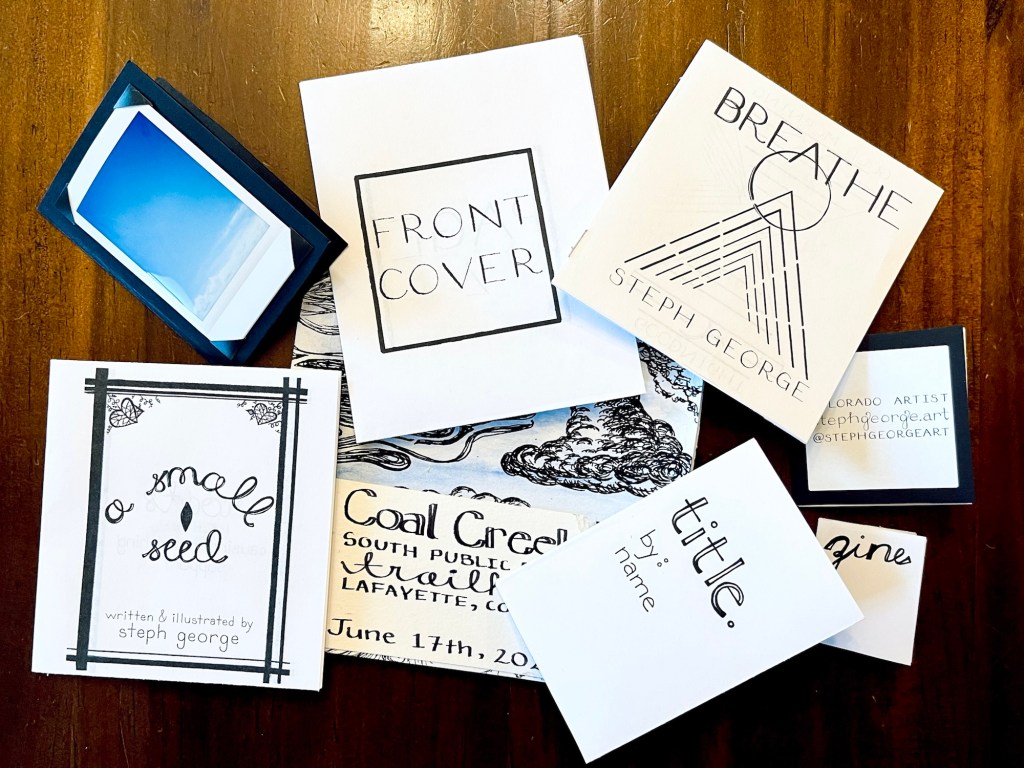
What is a zine?
Zines (pronounced ZEENS) are noncommercial miniature magazines, often handmade and devoted to specialized or unconventional subject matter. With an extensive history, zines became one of the most significantly simple forms of communication and connection.
Who can make a zine?
Anyone can create this fun and affordable art. The sky is the limit for materials, as long as it can be put to paper: pencils, pens, markers, colored pencils, paints, fabrics, magazine or book clippings, ticket stubs, postcards, greeting cards, old letters, photographs, pressed flowers, stickers, stencils… pure concentrated imagination. The most common method uses only a single sheet of printer paper at 8.5”x11” that is easily duplicated using a local library’s copy machine.
When are zines from?
Arguably dating back to the 15th century when Gutenberg’s movable type first allowed for mass distribution of ideas, Luther’s 95 Theses from 1517 or Thomas Paine’s Common Sense from 1776 are often considered the first publicized zines. A quick look though the 20th century sees 1920s Surrealist and Dada artists, 1930s Sci-fi fans, 1940s Beat poets, and 1960s Comic artists as early examples of zine creators. Although Chester Carlson invented the first photocopying machine in 1937, zines become widely available when copy shops opened in the 1970s.
Why are zines important?
Copying allowed makers from all walks of life to create independently published works, providing a voice for marginalized stories. The underground Punk scene utilized this inexpensive production and easy duplication as a platform to celebrate non-conformity, a mentality which continues to this day.
WARNING: the following video might not be appropriate for all ages.
Where are local zines found?
© Steph George. All rights reserved.
 STEPH GEORGE